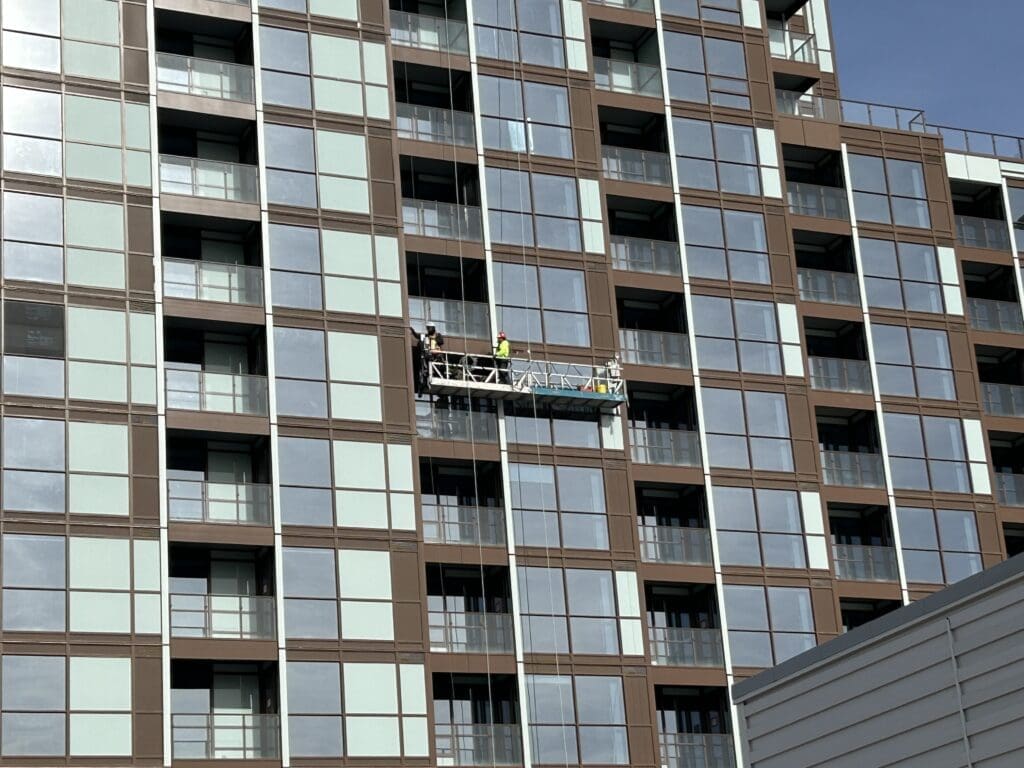
When it comes to sealing Exterior Caulking, it includes windows and walls, and they are not naturally waterproof on their own. The gap where a window meets the surrounding wall is usually the first place water finds its way in, along with cracks and gaps elsewhere across the exterior.
If water is getting through your building’s exterior walls or windows, exterior caulking stops it at the source. The right caulking and sealant materials prevent water from slowly wearing down walls, causing cracks, and leading to more costly repairs down the line.
Contact us by filling in the form on our contact page or calling (403) 265-8677.
Caulking and sealants are two different materials, though they’re applied the same way, which is why the terms often get used interchangeably. The key difference between them is elasticity, and choosing the right one matters for how well a repair holds up over time.
Both fill gaps and cracks between building materials, but they perform differently once cured:
Caulk is more rigid once dry, making it a good fit for areas with minimal expansion and contraction.
Sealant is more flexible, thanks to its silicone base, which makes it better suited to areas that expand and contract with temperature changes.
Different materials, same general purpose: both are commonly referred to as caulk because of how they’re applied.
Acrylic and latex caulk can be painted over and cleaned up easily with water, which makes it a practical choice for areas that need a finished, paintable surface.
The tradeoff is elasticity: caulk is not built to handle significant temperature swings, so it’s a better fit for stable, low-movement areas than for joints that expand and contract.
Sealant
Silicone sealant is highly flexible, holding a watertight seal in areas that see frequent temperature change, like exterior joints exposed to Calgary’s swings between seasons.
The tradeoff here is upkeep: sealant is not paintable and is harder to clean, typically requiring solvent or pressure scraping to remove smudges. It also gives off strong fumes during application, which matters for job site planning around occupied buildings.
Closing Line
The right choice comes down to the location, the exposure, and how much movement that joint will see over time. Our team assesses each application individually rather than defaulting to one material across the board.
What Our Clients Say
Absolutely the best services they did building repair were fast and professional i highly recommend sure seal contracting they support our community and the veterans of Calgary
This company is fast and efficient getting the job done the same week I called. Professional service and quality work. They were also under other quotes. I will use them again in the future.
Attention to detail is unmatched by any company I've been with they train you and strive for their workers to be the best in the industry
Why Its Worth Doing Right
Many caulking contractors in Calgary overlook critical steps, most commonly skipping full removal of old caulking before applying new, all-weather material. If old caulking isn’t fully removed, it compromises the new seal and leads to damage down the line.
Our team works fast and reliably without cutting corners on quality.
Get professional help with sealing and caulking for your commercial property. We’ll answer your questions and give you a free quote.